Defford Aircraft

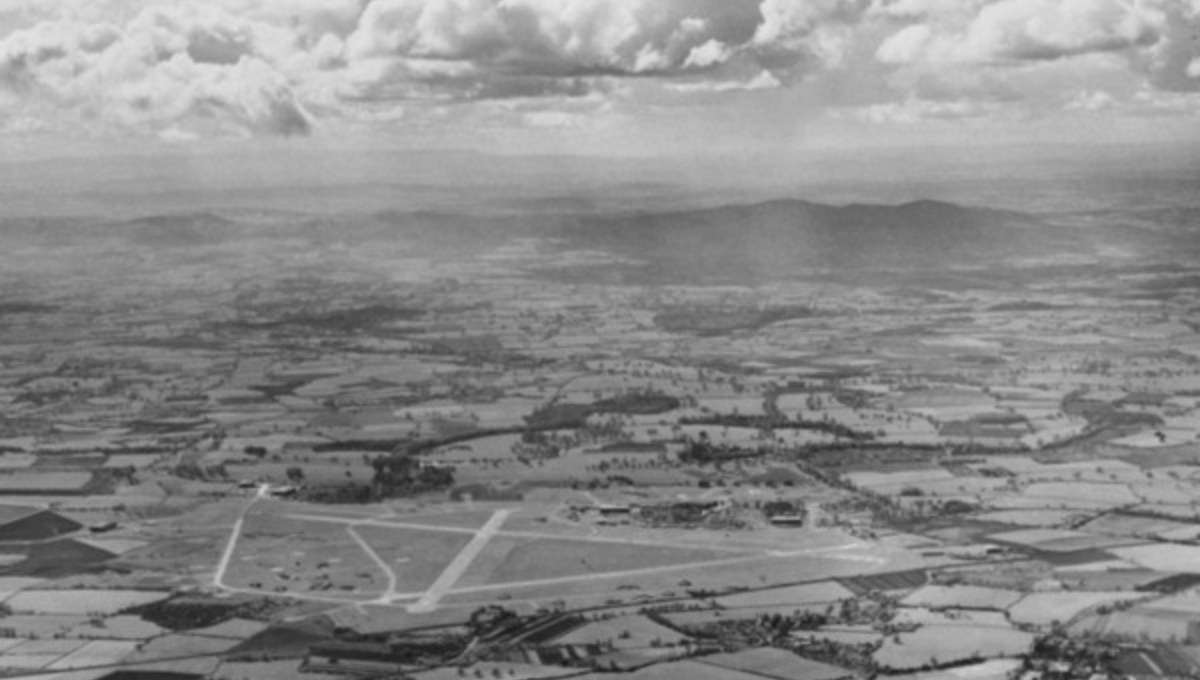
At its peak there were over a 100 aircraft stationed at RAF Defford. There was a huge variety of aircraft present as the newly developed airborne radar systems needed to be tested using different types of aircraft.
An extensive list is shown below that is compiled from the work of W.H. (Bill) Sleigh and Geoffrey Negus, which DAHG gratefully acknowledges. Work still continues on this subject as new facts are uncovered.
Click on the down-arrows to expand the list. You can also use the Search tool at the top of the page to find a particular model or individual aircraft serial number.

 Telecommunications Flying Unit
Telecommunications Flying Unit
- N6417 (Mk.II)
- R6345
- R6385
- T1208
- V4204
- X7285
- X7286
- X7294
- X7297 (SOC 18.5.46)
- P1364 (in 5.43)
- P1438
- N1370
- P4949
- Z6762
- Z6763
- Z6940
- Z9428
- N4871
- N9743
- N9774
- N9906
- R3429
- R3433
- DS628 (SOC 5.12.44)
- ED350 (used for H2S Mk.III research, 6.43; SOC 1.10.44)
- EE187
- HK804 (SOC 8.5.46)
- JA845 (H2S Mk.IV tests)
- JB375
- JB544 (H2S Mk.VII trials; SOC 24.6.48)
- JB558 (SOC 4.10.45)
- JB705 (used for Window tests; SOC 31.7.47)
- KB805 (Automatic Gun-laying Turret tests; SOC 3.7.47)
- L7528
- LL736
- LL737
- ND712 (for tests on remotely-controlled turrets)
- ND823 (H2S Mk.VI trials)
- NG408
- NX618
- PA417 (sold 24.11.49)
- PA976 (H2S Mk.VI tests)
- PB151 (SOC 21.5.47)
- PB532 (faired nose and Rebecca antennae, used for cloud-collision warning tests)
- PB641
- PB912 (SOC 25.5.47)
- PB930 (SOC 9.1.47)
- R5485
- R5609
- RF238 (sold for scrap 7.5.47)
- TW661
- RE238
- RE240
- RE251
- RE252
- RE378
- RE533 (H2S Mk.VIA, H2S Mk.VIII and Pye beacon tests)
- RF560 (crashed, killing crew, 1948)
- SX930
- DZ203 (Shown in photo. Used for blind-approach experiments, made world’s first automatic landing with ILS linked to Minneapolis Honeywell autopilot; flew about 300hrs on automatic approach and landing trials, flown by Sqn Ldr J Stewart; believed scrapped 1946).
- AA321
- AA323
- AA357
- AA372
- AA407
- AA409
- AA415
- AA419
- AA420
- AA549
- AA581
- AA666
- N3308
- N3488
- T4051
- T4055
- R2139
- R2195
- R2347
- T3356
- V8252
- V8259
- V8262
- V8268
- V8289
- V8387 (shot down in sea by Spitfire, 3 1/2m NE of Cromer, Norfolk 23.12.42)
- V8490 (in flight fire started around flap mechanism inspection panel and spread to cockpit; Flg Off W Devine abandoned aircraft which crashed, Malvern Wells 25.6.45; numerous items recovered from site by Severnside Aviation Society 1983)
- V8803
- V8835
- V8885
- X7565
- X7579
- X7613 (two spells)
- X7618 (to Admiralty 29.3.44)
- X7624
- X7630
- X7712 (two spells)
- X7802
- X7813
- X7816
- X7826
- X7832 (two spells)
- X7836
- X7840
- X7926
- X7962 (SOC 31.1.47)
- X8204
- AW217
- AW271
- AW314
- L4457
- L9971
- L1215
- L1217
- L1218 (dived into ground 3m E of Pembrey 24.5.42)
- L1220
- L1221
- L4839 (undercarriage collapsed on take-off, Defford 20.2.43)
- L4846
- L6695
- L6746
- L9405 (ditched off Chesil Bank, Dorset 29.11.41)
- L9837
- N3522
- P4839
- P4846
- R3601
- V6000 (first 10-cm AI flight 1.11.41)
- V6385
- Z5909
- Z6185 (SOC 11.6.45)
- AL507 (two spells)
- AL531
- XA880
- NR698 (flew to Ringway and back 9.6.47; until 3.48)
- DZ301 (used for early attempts to project information on to windscreen – primitive ‘head-up’ displays)
- DZ345 (flew into Breedon Hill, Overbury 17.10.43)
- DZ401 (Mk.IV)
- KB551 (B.Mk.25, SOC 12.11.47)
- TW231 (hit by Lancaster NX618 while parked at Defford 29.5.47)
- VT676 (SOC 31.3.52)
- R4947 (hit tree 1m NE of Bransgrove, Hants 26.5.42)
- T6367
- VT857 (sold for scrap 5.4.56)
- VT858
- AH438 (to USAAF 5.4.43)
- AH443 (SOC 26.9.44)
- AH467 (overshot landing at Defford 13.9.44)
- AH495 (damaged beyond repair 14.5.43)
- AH502 (SOC 23.9.44)
- AH513 (SOC 5.10.44)
- AH515 (undercarriage jammed; swung on landing and nosewheel collapsed, Defford 28.2.43)
- AH522 (overshot landing and nosewheel collapsed, Defford 22.11.43)
- AH528 (SOC 21.6.44)
- AL479
- K9028
- N2124 (to RAAF 12.3.42)
- P4008 (used for ASV development).
- LA728 (prototype; used for Airborne Early Warning trials; ceased to fly on about 10.2.48; blown up as part of Battle of Britain Display at Defford following simulated strafe by Beaufighter 18.9.4)
- K5200 (prototype; with TFU 27.10.41-8.4.42)
- K7898
- K8049
- JZ464
- FN212
- BB278
- BB280
- DT568
- HR672
- HR742
- HR746
- HR774
- HR815/G
- HX238
- R9490 (Del. to TFU 12.4.42; first flight with H2S 2.6.42; to 4455M 2.44)
- RG815
- V9977 (Del. to TFU at Hurn 27.3.42; magnetron H2S installed; first flew with H2S 16.4.42; caught fire at 500ft and crashed 8m SSW of Ross-on-Wye, killing 11, 7.6.42)
- W1013
- W7711
- W7808
- W7823(?)
- W7825
- W7851
- W7872-W7878
- P1216
- AF975
- AM311 (SOC 12.8.44).
- P3585
- V6557
- V6694
- V7709
- V7726 (crashed in forced landing, Fordingbridge, Hants 25.3.42)
- Z2795 (engine cut on take-off, crashed 21/2m N of Hurn 27.4.42)
- PR802 (crashed on landing, Defford 28.3.47).
- MM984
- AE610
- AM714
- AM819
- AM907 (SOC 14.8.44).
- AE682
- FN956
- FN957
- N5414
- X9455
- BK616
- LJ516
- LJ541
- LJ595
- LJ649
- LJ651
- N3724
- R9248
- R9252
- R9255
- R9257
- R9260
- R9263
- R9266
- R9270
- R9272
- R9273
- R9275
- R9278
- W7447
- KK993 (3.46 until at least 2.48, photo in Air-Britain Digest 6.69 p162)
- KK995 (circa 1947, still bore 527Sqn code KXR; photo in Aeromilitaria 1984 p99)
- AR253
- EN915 (complete loss of rudder control, pilot bailed out, High Church, Glos 1.2.45)
- W3377
- X4845 (SOC 20.5.45)
- X4909 (SOC 25.11.44)
- X4918 (collided with Tiger Moth N9384 of 2EFTS near Perton – more likely Pirton, which is very near Defford – 26.2.43)
- X4933 (to 3596M 3.43)
- HG218 (overshot emergency landing, Shobdon 21.6.46 and not repaired).
- N2761
- P9214
- R1322
- R1629
- R1655
- T2823
- T2968
- W5389
- W5451 (two spells)
- W5480 (two spells)
- W5657
- W5661
- W5672
- W6734
- X3455
- X3458
- X3566
- X3707 (crashed on experimental flight, Craiglockhart View, Edinburgh 14.12.42)
- X3994
- X3998
- X9678
- X9741
- Z1322
- Z1568 (SOC 12.5.47)
- Z8440 (to 4169M 9.43)
- Z8581 (SOC 5.6.44)
- Z8705 (developed uncontrollable swing to left after take-off, crash-landed, Defford 29.6.42)
- Z8830 (SOC 19.3.44)
- Z8902 (two spells; SOC 24.8.44)
- P9111
- V9500 (hit tree in approach to forced landing, Woodgates Manor, Dorset 4.4.42)
- V9598
 Telecommunications Research Establishment
Telecommunications Research Establishment
[‘SOC’ stands for Struck Off Charge. This term signifies that an aircraft is removed from official records, typically before being scrapped, donated, or sold. It indicates that the aircraft is no longer considered part of the active fleet and is no longer subject to operational requirements]
- W1706
- VM360 (on MoS charge)
- RE229
- RE346
- RF329
- RF561
- SX924
- SX976
- MW117
- MW234
- MW296
- MW310
- VR380 (prototype; fitted with racks for underwing stores; used for development of AI, converted to flying laboratory and fitted with various radomes, sold, delivered Defford-Blackbushe 14.3.58)
- VR382 (26.9.46-6.3.58 when by road to Blackbushe for scrapping; picture Air Pictorial 1957 p261)
- VP980
- XA880 (visited Bovingdon 7.12.55)
- PX222
- NF.38 VT657 (sold for scrap 19.11.53)
- VT659 (sold for scrap 22.4.54)
- VT677 (sold for scrap 7.9.54)
- VT703 (sold for scrap 7.9.54).
- VV446
- WA172
- FZ564 (15.3.44-17.9.45)
- VN813
- VN828 (overshot single engined landing, Defford 10.6.53)
- WD929
- WD963 (two spells).
- VT196
- VT340
- WD586 (SOC 5.9.57)
- WD587
- WD686 (Shown in photo. Manufactured by Armstrong-Whitworth. To MoS 29.11.55)
- WD790
- WD791
- WH284
- WM180 (SOC 16.6.58)
- WM373 (Fireflash trials; to Australia 13.4.55)
- WM374 (SOC 22.8.58)
- WS731.
- W7823
- KJ599
- VX561
- WJ491
- WP200 (Shown in photo. Of the Ministry of Supply Establishment was based at Defford. It made an emergency landing at Prestwick on 13 February 1956)
- P9214
- W5385
Radar Research Establishment / Royal Signals and Radar Establishment
Radar Research Establishment / Royal Signals and Radar Establishment
In 1953 the Air Ministry’s Telecommunications Research Establishment (TRE) and the Army’s Radar Research and Development Establishment (RRDE) were merged to form the Radar Research Establishment (RRE). In !957 the organisation received the royal charter and became the Royal Radar Establishment (still RRE). Then in 1976 the Signals Research and Development Establishment (SRDE) and the Services Electronic Research Laboratory (SERL) were merged with RRE to form the Royal Signals and Radar Establishment (RSRE).
Military flying at Defford ceased in September 1957, when the RRE’s flying unit moved to Pershore. [One occupant at the time of the move was the Tay Viscount VX217, operated by Boulton Paul, which later moved to Seighford]. So the list below spans the periods when flying took place from Defford and then Pershore.
- WB491
- WB492 (Shown in photo)
- WL748
- VR380
- VR382
- XA880
- NF880 (3.9.54-8.6.56).
- WR783
- WX797 (sold for scrap 10.2.58).
- VN828 (Shown in photo. B.Mk.1 with Mk.8-style cockpit canopy and nose-mounted radar)
- VX181 (in use by RRE 1956; in 11.69 parked in open, Pershore; in 1970 moved from fire dump and parked on apron; in 2.72 reported destroyed)
- WD953 (in 11.69 in open storage)
- WE121
- WE147 (PR.3, in 11.69 in open storage)
- WF917 (B.2, visited Cambridge 2.3.67)
- WF922
- WG789 (B.2, in 11.69 in open storage)
- WH660
- WH704
- WH774 (PR.7)
- WH776
- WH844 (T.4)
- WH854 (scrapped at Pershore 11.69)
- WH953 (B.6)
- WJ627
- WJ646 (Shown in photo. Broken up at Pershore)
- WJ990
- WJ992 (T.4)
- WK120
- WK123
- WK126
- WK128 (B.2)
- WK129 (B.2, flew into summit of Carnedd Llewellyn, Caernarvon, no survivors, 9.12.57)
- WK163 (B.2)
- WT305 (B.6, about 7.73 – 1975)
- WT327 (B(I)8, 12.4.66 for radar trials, fitted with modified nose, housing laser ranger and marked target indicator, first flight as such Pershore 4.71, left 21.11.76)
- WT333 (B(I)8, 21.7.69-8.9.70 and 24.2.72-18.5.77 when moved to Bedford)
- XH132
- XH567 (B.6)
- XH568 (B.6)
- AEW.3 XL502 (coded 076, with RRE 1974).
- VT340 (F.4, crashed during instrument flying 31/2m West of Bransford 13.4.49)
- VT342 (F.4, dived into ground, Bransford House Farm 21.12.50
- WD744
- WD790 (NF.11, with RRE 1971)
- WH284
- WM366
- WS832 (NF.14).
- TG503 (used by H2S Mk.9 trials 1951; still used 1956)
- TG514
- TG583 (used on Passive Q-band and Red Cabbage tests from 25.8.54, returned 28.7.64)
- WD480 (modified for sonobuoy trials, with long nacelle under fuselage housing ASV radome amidships and stowages for sonobuoys fore and aft – Shorts have picture of it in flight – Putnam HP Aircraft p454)
- WD482 (joined RRE at Defford, in use 1956, rudderless at Pershore, late 1969)
- WD484 (took off with elevators locked, stalled and dived into ground, Boscombe Down 2.3.55)
- WD499 (C.2, last flight 29.9.74).
- VX234 (joined 6.58; used for SLR – sideways looking radar – trials for the TSR2, equipment housed in long slender radome under fuselage; by 1.66 had logged 1,000hrs; the last operational Hermes; SOC and scrapped, Pershore 1969).
- F.4 WV325 (sold 18.10.67)
- XK526 (S.2)
- XN964 (S.1, non-operational, arrived 1972)
- XN975 (S.2, damaged in crash landing 7.6.78)
- XX897 (S.2B)
- XZ340
- XV148
- XH132
- WF379
- WG262 (loaned from 2ANS, Thorney Island 7.4.53-1.6.53)
- WJ475 (loaned from 6ANS, Lichfield 14.4.53-15.5.53)
- WJ913 (flew to Stansted and back 24.10.67)
- WL680
- WF379 (fitted with projecting nose radar).
- XT575 (Model 837)
- XT661 (Model 838).
- XW234
- XV651 (064, with RRE 1972 and ’74).
- XM926
- XJ409
Station Aircraft
Station Aircraft
Station aircraft also included:-
- L7270
- NM785
- T1076
- T1208
- N5017
- N9774
- VL335
- VM360
- VM393
- N9240
- R4901
- EE214
- MN254
- N5414
- L4403
- BL629
- X9527
- BJ643
- W5357
AVRO LINCOLNS AT DEFFORD The Avro Lincoln was developed from the Lancaster in 1943, featuring an increased wingspan and uprated Rolls-Royce Merlin 85 engines which yielded a significantly higher service ceiling than that of its predecessor. The Lincoln joined the fleet of aircraft carrying out radar trials for the Telecommunications Research Establishment (TRE) at Defford […]
Learn More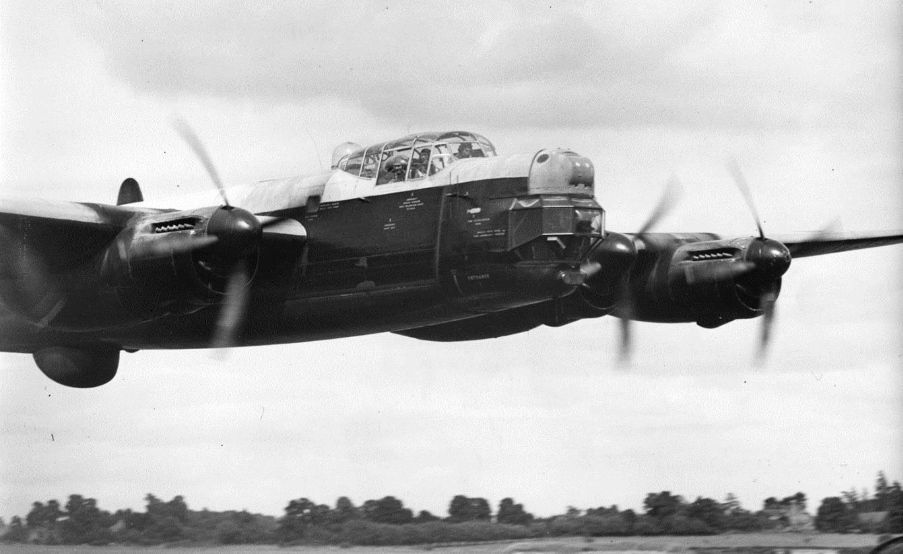
Mosquito Aircraft at RAF Defford Extracts from W.H. Sleigh’s RSRE Report, ‘Aircraft for Airborne Radar Development’ The MOSQUITO AIRCRAFT was a unique de Havilland concept of 1938 for a high-performance twin-engine aircraft relying on speed rather than defensive armament. It mostly was constructed from wood, for both industrial economy and quickness of production. The prototype […]
Learn More
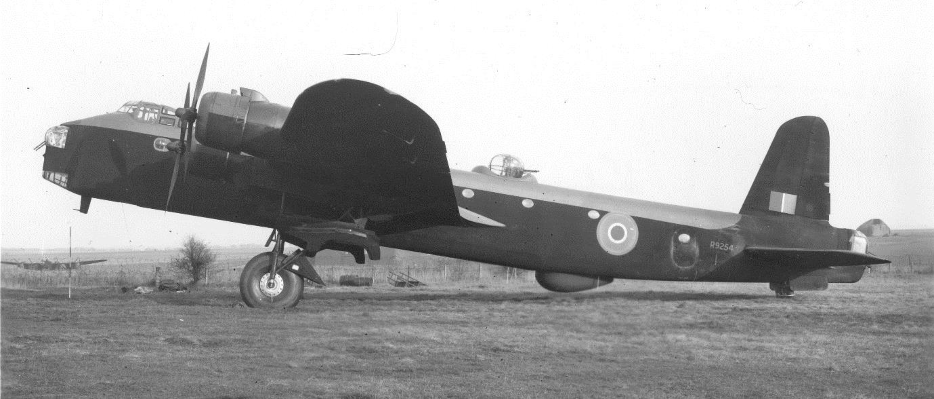
SHORT STIRLINGS AT DEFFORD The following is taken from an article written by Bob Shaw, October 2018 The Short Stirling was the first of the three four-engine heavy bombers to enter service with the RAF in the Second World War. Unlike its better known and more successful contemporaries that followed it into service – the […]
Learn More